Partnership to Accelerate Education R&D

Leanlab Education and Align R&D Announce Strategic Partnership to Accelerate Education R&D
Leanlab Education and Align R&D today announced a strategic partnership to advance education research and development in an era of rapid technological change. The two education R&D organizations will collaborate to strengthen research infrastructure, expand access to evidence, and ensure that insights from the study of emerging tools reach educators and innovators.
Both organizations are working toward the same goal: to produce and share evidence that keeps pace with a rapidly changing landscape and informs school and education system decision-making. As learning solutions evolve faster than traditional research cycles allow, we believe it takes multiple perspectives and complementary infrastructure to generate insights that are rigorous, timely, and actually useful to educators and decision-makers.
“Align R&D's experience spanning large-scale federal programs, major research institutions, and philanthropy gives us a rare bird's-eye view of the American education R&D landscape. Their expertise, paired with our nimble approach and edtech expertise, positions us to build the initiatives and infrastructure this moment demands,” said Katie Boody Adorno, Leanlab Education Founder and CEO.
Align R&D Founding Partner Erin Higgins added, “Our organizations share the belief that our education system should be designed with the best information we have available. Through this partnership, we can explore how we achieve that vision through new research infrastructure, cross-sector partnerships, strategy, and measurement approaches.”
At the center of the collaboration is a north star focus on improving student outcomes, and a shared belief that producing and sharing evidence must be more accessible, faster, and aligned more closely to the decisions educators and systems actually face.
About Leanlab Education
Leanlab Education is an education R&D lab at the intersection of research, product, and practice. Through rigorous, nimble methodologies and its AGILE Network of school partners, Leanlab helps edtech companies and school systems validate innovations and build the evidence base needed for informed adoption decisions.
About Align R&D
Align R&D works through capacity building as well as research and funding strategy to build an education R&D ecosystem aligned to the priority needs of today and the emerging challenges of tomorrow — one where every level of the education system can operate based on the most up-to-date information about what could work for the decision at hand.
IES is being asked to do too much
Authored by: Alex Resch
As a former fellow at the Institute of Education Sciences, I’ve been reading the commentary about IES’s role with great interest since Amber Northern’s Reimagining IES report was released a few weeks ago. In late 2023, I joined IES as a Federation of American Scientists Impact Fellow, supporting the Accelerate, Transform, Scale Initiative that was charged with supporting R&D to develop and build evidence for breakthrough, innovative solutions to education's most persistent problems. After 19 months working at IES and 9 months reflecting on what I learned and what that implies for our path forward as a field, the thing I keep coming back to is that IES faces a challenge that is common to many schools and districts - they are being asked to do too much and with too few resources.
Before I came to IES, I worked closely with educators and district staff, product developers, and philanthropic funders of education R&D to try to implement evidence-based practices locally and to learn as much as possible about what’s likely to work in what context. Through this work, I observed that the actors in each sector often misunderstand the constraints and priorities of their counterparts and everyone had strong opinions on what IES should be doing differently. My impression was that many researchers and funders had wildly different understandings of what IES was trying to achieve and what constraints it faced. I was excited to join IES to learn more about this disconnect and better understand IES’s role in education R&D.
At the highest level, IES is charged with providing “national leadership in expanding fundamental knowledge and understanding of education from early childhood through postsecondary study, in order to provide parents, educators, students, researchers, policymakers, and the general public with reliable information,” which seems reasonable. But when you dig into the specifics, there are a lot of constraints on how IES is organized and what it must pursue. To bring in a research analogy, this doesn’t leave the agency with many degrees of freedom - there are many requirements and constraints imposed by the authorizing legislation, and relatively few resources (both in terms of dollars and people) to achieve them all.
As one example, IES’s authorizing legislation, the Education Sciences Reform Act or ESRA, specifies that NCER shall (in other words, must) sponsor research in 11 topic areas. NCEE has 5 topics specified, NCES has 15, and NCSER has 17 examples of activities it could undertake. These topics are overlapping and generally allow leeway in identifying areas of need to educators, but because these are statutory constraints, staff must spend time and resources ensuring and documenting that their programs meet the specific requirements. In practice, topics are distributed across staff to provide a clear point of contact and allow staff to develop expertise, yet this can create additional silos and can restrict the ability to coordinate and collaborate across centers. Improving coordination and collaboration would take additional staff and resources. Even before last year’s layoffs, IES felt understaffed to me and now there’s just a skeleton crew trying to meet these requirements and keep IES’s important work going.
I like the idea in the report to organize R&D efforts around problems in the field and this could be a useful tool for reorganizing IES. But this is not a new idea and it’s not going to be easy. When I started my fellowship, I worked with other FAS fellows to develop a list of pressing problems of practice in education. The problems are at different grain sizes and implicate different actors and decision makers in the system. We divided the problems into 8 topics to provide some organization, but many problems overlap with others in other topics. I’ve found it very difficult to categorize these into clear problems that R&D can address. Partly this is because I’m not close enough to daily work in schools and districts, so getting input from those who are could help. But it will also be challenging and time consuming to prioritize among the many possible problems. And who decides? A bottom up process that genuinely engages educators will take time and careful facilitation. And a top down process where some centralized body decides is unlikely to be seen as responsive to local needs and compliant with local control of education.
I agree that this is a time to take stock and think about how we could improve IES. But I worry that a root cause of insufficient progress throughout the education system is a lack of resources and a lack of trust in the institutions we’ve established to do this work. We can’t keep asking people to do more with less and expect better results. If I were to make one recommendation about the future of education R&D, it would be to provide the level of funding for R&D that’s found in other sectors of similar importance to our society and economy.
Who Does IES Want to Be When It Grows Up?
Authored by: Erin Higgins
As IES grows up, it shouldn't have to choose between being a scientist or an engineer. Its most impactful future lies in being both: an agency that seeks to understand the fundamental mechanisms that support education outcomes for students and that uses that knowledge to build the education experiences our students deserve to thrive in an ever-changing future.
As a mother of two, I both ask and frequently hear the question, What do you want to be when you grow up? I have learned that my kids’ answers change often, are sometimes completely unpredictable, and are a window into their developing minds. My seven-year-old’s most recent answer was: “I want to be the owner of a mall, so I can get everything for free!”
Kids’ answers to this question continue to morph and change because they are still learning about the world and exploring how they can show up best in it. As kids grow into young adults, their interests and career aspirations narrow, but they still have a lot to learn about who they are and how to apply their skills to make big impacts in their chosen profession.
Right now, the Institute of Education Sciences (IES)—the research arm of the U.S. Department of Education—is growing up and undergoing its own identity shift. IES was established in 2002, so if IES were a person, it would be a recent college graduate: knowledgeable and capable, but still fundamentally figuring out who it wants to be in the world and how it can make the biggest impact.
The recently released report, Reimagining the Institute of Education Sciences, led by Amber Northern, impressively distills feedback from a wide range of stakeholders in the education field into a comprehensive set of recommendations designed to increase the impact of IES’s work and shape its new identity. The report’s main thesis is that the vision for IES is a good one, but just about everything about how IES does its work needs an overhaul. One of a small handful of bright spots highlighted in the report is the Accelerate, Transform, Scale (ATS) Initiative, which my team and I developed and led. So, not surprisingly, I have some thoughts about this proposed new identity for IES.
Keeping with the IES-as-a-person analogy, in its younger days, IES was deeply committed to its identity as scientist. It focused heavily on theory-building and rigorous methodology. It sought to understand the how and why of learning and identify the components of the education system that support education outcomes. While this work was vital for building a knowledge base to inform policy and practice, it was not making consistent impacts on the education system. Over the years, different reasons as to why have been discussed – inadequate dissemination and engagement with education stakeholders, lack of alignment between research priorities and the needs of the education system, the pace of evidence-building, and relevance of the research to practical on-the-ground decisions and contexts.
The ATS Initiative and its underlying programs were developed to address these different facets of the research-to-practice gap to bring evidence-based programs, policies, practices, and products to scale. The report rightly notes this and encourages IES to expand this initiative and to more broadly adopt new strategies to bring more relevance and practicality to its work. The report pushes IES, and specifically the work of the two research centers, the National Center for Education Research (NCER) and the National Center for Special Education Research (NCSER), to take on the identity of solutions engineer tasked with:
Product Engineering: Building and refining tools, programs, and policies.
Program Evaluation: Quickly determining if a specific intervention "works" in the moment.
Rapid-Cycle Innovation: Speeding up the timeline to keep pace with the private sector.
Going all in on the engineer identity is tempting, and an expansion of the initiative my team built would be a wonderful development. However, we lose something if we veer too much in this direction. IES was established as a science agency, and it should not lose that identity. Engineering-oriented initiatives like ATS will only work if IES continues to make substantial investments in scientific research about learning and education and then uses those insights to seed the next generation of innovation. We must expand the pipeline of R&D that IES invests in to include more applied R&D, not shift it completely. Without scientific theory, innovative solution ideas are just shots in the dark.
Take the science of reading movement that the education research field uses as an example of research making a meaningful impact on practice. We have effective, evidence-based literacy programs and products today because the education research field, largely funded by IES, spent decades doing foundational R&D to understand how children learn to read. If we had only focused on engineering solutions or evaluating the specific products available twenty years ago, we never would have unlocked the breakthrough theories that are currently transforming reading outcomes for students.
This balance between investing in foundational research and solutions engineering is even more important today as emerging AI-enabled technologies enter the classroom. For example, continued investment in the science of learning will be critical for identifying the ways that AI can make a positive difference for students and teachers and for designing high quality products that move the needle on education outcomes. Key to ensuring IES implements this balance effectively is clear understanding and communication with the field about the relationship between different research methods and study goals to the evidence claims they support.
As IES grows up, it shouldn't have to choose between being a scientist or an engineer. Its most impactful future lies in being both: an agency that seeks to understand the fundamental mechanisms that support education outcomes for students and that uses that knowledge to build the education experiences our students deserve to thrive in an ever-changing future.
Align R&D on Redesigning the Institute of Education Sciences
As former IES staff who sought to make changes at IES and more broadly in the field, we appreciate the opportunity to share what we have learned. We have two main recommendations: (1) continue the work of the ATS Initiative and build on the strategies we had established while we led that initiative and (2) address the barriers to change at IES so that the recommendations you receive can be implemented with minimal friction.
The US Department of Education sent out a Request for Information on Redesigning the Institute of Education Sciences (IES). As a team we worked firsthand in leading innovation initiatives through IES’s Accelerate, Transform, Scale program, and have insights on how IES could modernize its programs, processes, and priorities to better serve the needs of the field and American students. We’re pleased to have the opportunity to formally share our experience and learnings to support the continued efforts of IES.
Our full response is below. You may download a copy here.
Re: Docket ID number ED-2025-IES-0844
Dear Dr. Northern:
Thank you for the opportunity to provide feedback on redesigning the Institute of Education Sciences (IES). Align R&D is an organization founded to build an education R&D ecosystem aligned towards the priority needs of today and the emerging challenges of tomorrow. Align R&D’s four co-founders - Erin Higgins, Jessica Tsang, Alex Resch, and Katherine McEldoon - worked at IES to establish and lead the Accelerate, Transform, Scale Initiative. Our job was to design programs at IES to support R&D to develop and build evidence for breakthrough, innovative solutions to education's most persistent problems.
Our experiences at IES centered on the work that the National Center for Education Research conducts, so our response will primarily focus on Area of Interest #2: “Leverage its grantmaking to advance impactful, practitioner-relevant research on pressing topics, with specific input on the identification of those topics.” As former IES staff who sought to make changes at IES and more broadly in the field, we appreciate the opportunity to share what we have learned. We have two main recommendations: (1) continue the work of the ATS Initiative and build on the strategies we had established while we led that initiative and (2) address the barriers to change at IES so that the recommendations you receive can be implemented with minimal friction.
1. Continue the ATS Initiative and build on its core principles
The ATS Initiative work was guided by the following principles, and we recommend that IES continues to build upon and champion these throughout its grant programs:
Focus on how a new innovation will scale throughout the entire R&D process, from problem definition to intervention development to efficacy testing. This includes understanding the practitioner- or student-oriented problem that the innovation is addressing, thinking proactively about how a new innovation would be integrated into practice, and determining how to build and scale a sustainable venture. IES, through the ATS Initiative, funded the LEARN Network to build capacity in the field to think about scaling from the beginning and to support teams who have built evidence-based products to address the issues they have encountered while trying to scale.
Fund cross-sector teams that include people with research, product development, and practitioner perspectives and skillsets. Incorporating these perspectives from the start increases the likelihood that new innovations will be useful, usable, and have the desired impact on learning outcomes. Through the ATS Initiative work, we learned that the field also needs capacity-building and training to learn to work within a cross-sector team. The ATS Initiative programs Transformative Research in the Education Sciences, SEERNet Network, and From Seedlings to Scale all emphasize the importance of cross-sector teams. For example, SEERNet teams are building infrastructure to facilitate stronger researcher/product developer partnerships and to speed up the process to scale up findings from research.
Establish new funding structures to encourage bold thinking, innovative ideas, and new applicants who bring new perspectives to the work. These funding structures should allow for IES to take responsible risks, by which we mean IES would invest in new and different ideas that may or may not succeed, but would have built in milestones and checkpoints in place to discontinue a project that is unlikely to be successful. The From Seedlings to Scale program was developed with this responsible risk concept in mind. Grantees would be given a year to show success on milestones determined by IES, and only a subset of grants would be selected for the next phase of work. Below we note the barriers that need to be removed in order to use the full range of funding mechanisms that other R&D agencies have available.
Continue the Innovation in Education Interagency Working Group (IWG). The RFI explicitly asks for recommendations to support cross-agency communications and collaboration. The Innovation in Education IWG met monthly and included members of key offices at ED, NSF, and DOL. The IWG was growing throughout 2024 and was hoping to add members from other agencies after a successful cross-agency convening in November 2024. This convening included over 100 participants from over 30 unique agencies and program offices. Monthly meetings served as opportunities to communicate across agencies about initiatives related to education innovation and education R&D. Members discussed shared opportunities and challenges. We strongly recommend re-establishing this working group as a way to keep in communication with colleagues across agencies and forge collaborations as opportunities arise.
Early successes from the ATS Initiative investments mentioned above, in addition to the Education R&D Centers on Generative AI include many new applicants, including substantially more businesses and nonprofit applicants than has been typical for IES grant competitions; establishment of new phased grant structures that can be replicated in future grant programs; and new infrastructure (e.g., SEERNet) and resources (e.g., the LEARN Network toolkit) that the field can leverage to support scaling and cross-sector collaboration. IES should continue to learn from these investments and grow this initiative.
2. Address barriers to change at IES
Our team had to advocate for a number of changes at IES to build the ATS Initiative. In our experience, making changes at IES was slow and difficult due to a number of barriers. These include:
Speed of decision-making: When changes to processes need to happen, a number of staff are involved, including the entire IES executive team as well as ED lawyers. These staff are very busy and there are many facets of a decision that need to be considered, including whether it complies with IES’s guiding legislation, whether it can be implemented within the Standards and Review established processes, and whether IES has sufficient staffing to make it happen. In addition, IES is a small agency without any administrative or logistical support for its leadership team. These staffing and capacity constraints have direct implications on project timelines, meaning that changes to processes take a very long time to implement. IES leadership should be provided with administrative and logistical support, which is common in other agencies, to free up their time to focus on strategic initiatives. IES should also consider processes for accelerating timelines and streamlining decision-making, including identifying who needs to be involved for each type of change and encouraging decentralized decision-making where appropriate to reduce burden on busy staff.
Outdated legislation and processes: The Education Sciences Reform Act (ESRA) was authorized in 2002. This legislation needs to be updated in order to free IES up to structure itself differently. The initial purpose of IES was to provide “national leadership in expanding fundamental knowledge and understanding of education from early childhood through postsecondary study” (ESRA, 2002). IES has made huge strides in bringing rigor to education research and in training a new generation of education scientists to meet the charge laid out in ESRA in 2002. Now IES needs to evolve with the needs of the field. There is recognition of this at IES, and staff were constantly looking for ways to stay in touch with the needs in the field, but all changes had to comply with this 2002 legislation. As it relates to the ATS Initiative, unlike DARPA and other ARPA agencies that have Other Transaction Authority (OTA), IES does not. OTA provides the flexibility to collaborate with and fund a wide range of providers. Through updated legislation, IES could be granted OTA to rapidly pilot and fund innovative R&D projects and to partner with a wider range of organizations that may not typically engage with federal grants. Additionally, our team explored whether we could use Broad Agency Announcements (BAAs) to support research and development, as this is another tool that R&D agencies across government use to expand who is eligible to apply for funding (one of the key ways to encourage more innovative thinking); however, ED had never used this mechanism before, so there was hesitation to employ it. Consequently, we were unable to leverage it for our initiatives.
Insufficient staff to support a wider range of peer review processes: The peer review process needs to be more flexible and responsive to the needs of particular grant programs. The ATS Initiative was trying different funding structures, all of which required new types of reviewers, faster review turnarounds, and more reviews in a given program (e.g., From Seedlings to Scale is a phased grant program, so review is required at multiple stages of a project). However, without sufficient staff, there is no capacity to adapt the process in this way and do so quickly. IES must increase staffing to support peer review and encourage the use of a broader range of peer review processes to better support the unique needs of different types of grant programs. Additionally, some grant programs - especially newer programs - would benefit from more involvement from IES staff during the peer review process to level set reviewers on program goals to calibrate review priorities. IES needs to get approval from the National Board for Education Sciences for a wider range of peer review processes so that peer review can be customized to the needs of a particular grant program.
Limited funding and staff across IES: The total amount of funding and the number of staff at IES are significantly lower than other science agencies, such as HHS, NSF, and DARPA. For example, the ATS Initiative was being led by a single staff person for its first few years. Eventually 2 fellows were added, and in October 2024, years after the need for more staff was identified, a second federal employee was hired. All of these staff along with most staff at IES have separated from the agency due to layoffs and expired fellowship terms. To increase the pace and scale of R&D in education, we need significantly increased funding and staffing. Another example of inadequate staffing is in IES’s communications office. This office typically has only one person on staff. One person cannot effectively support the communications needs of four centers, plus lead an overarching IES communications strategy at the same time. Overburdened technical staff within each center have tried to take on some communications work as time allows, but these staff are not experts in communications, nor did they have enough time to carry out this work. The lack of investment in communications staffing has severely diminished the impact of IES investments and has led to misconceptions about what IES does since IES largely does not control the narrative.
Capacity of the education R&D field: What IES can accomplish is limited by the strengths and priorities of the broader education R&D field. Investments in training and capacity building are necessary to improve the quality of the work that IES produces. Our team found that when IES put out new grant opportunities that required innovative partnerships or R&D approaches, training and capacity building was needed to receive quality applications with the features IES was looking for. For example, when IES grants programs began requiring cost analyses, it took the field 2-3 years plus access to a technical assistance center on cost analysis to get to a majority of applications with high quality cost analysis plans. As IES pushes for improvements in how research is conducted, it needs to recognize that the field has to be willing and able to change as well, which requires continued investments in training programs and upskilling opportunities for education researchers.
Thank you for the opportunity to share our perspective on how IES can improve upon its strong foundation as the nation’s leading source for rigorous, independent education research, evaluation and statistics. If you would like to follow up with us about any of our recommendations, you may contact us at contact@align-rd.org.
Sincerely,
Align R&D
Introducing Align R&D
Introducing Align R&D
In this inaugural blog post, we are proud to announce the soft launch of Align R&D, our new organization committed to aligning the education research and development (R&D) ecosystem towards the priority needs of today and the emerging challenges of tomorrow.
In this inaugural blog post, we are proud to announce the soft launch of Align R&D, our new organization committed to aligning the education research and development (R&D) ecosystem towards the priority needs of today and the emerging challenges of tomorrow.
Our Origin Story
We initially came together while creating and leading the Accelerate, Transform, Scale (ATS) Initiative at the U.S. Department of Education’s Institute of Education Sciences (IES). The ATS initiative was a pioneering set of grant programs designed to source and support breakthrough ideas through novel R&D processes and funding structures. ATS also served as a pilot for the National Center for Advanced Development in Education (NCADE), a proposed national effort to reimagine how education R&D is funded and executed. We as individuals brought different expertise in education R&D from the vantage of federal and state government, philanthropy, academia, research firms, and technology development; yet, we were united in our commitment to establishing a national model for rapid education R&D funding and support that is critical for the education ecosystem.
In early 2025, the ATS Initiative work was halted abruptly and our team disbanded. As we processed the news, we made plans to attend the ASU+GSV Summit to hear from others in our field and explore our next steps. For our team, the outcome of that trip was a renewed commitment to what we had started at IES, with a clear enthusiasm for exploring how we could adapt our team's strategies and core values to support initiatives to build R&D infrastructure outside the federal government. At a dining room table in San Diego on the last night of the trip, we scoped out how we could create the path to continue our work. What followed was months of planning, many conversations with people across our networks who offered valuable advice (thank you!), and ultimately the establishment of Align R&D.
What We Seek to Accomplish
In our first five years, we aim to support the education R&D ecosystem by building resources and infrastructure, strengthening existing capacity, and supporting collaborative, cross-sector team science approaches.
What sets Align R&D apart is our ability to see the entire system and navigate its complexity. We don't just advocate for change; we design the mechanisms, align the incentives, build the relationships, and coach the teams required to make it happen.
Ultimately, we aim to help:
Funders make better investment decisions.
Teachers access research that matters to their practice.
Developers create more effective educational tools.
Researchers use appropriate methods for the questions they're investigating.
We are excited about this new chapter and look forward to a future in which an aligned education R&D ecosystem achieves its potential to make a major, positive impact on education.
We’re currently developing our vision and strategy, and we welcome your feedback. Please reach out for a conversation at contact@align-rd.org.
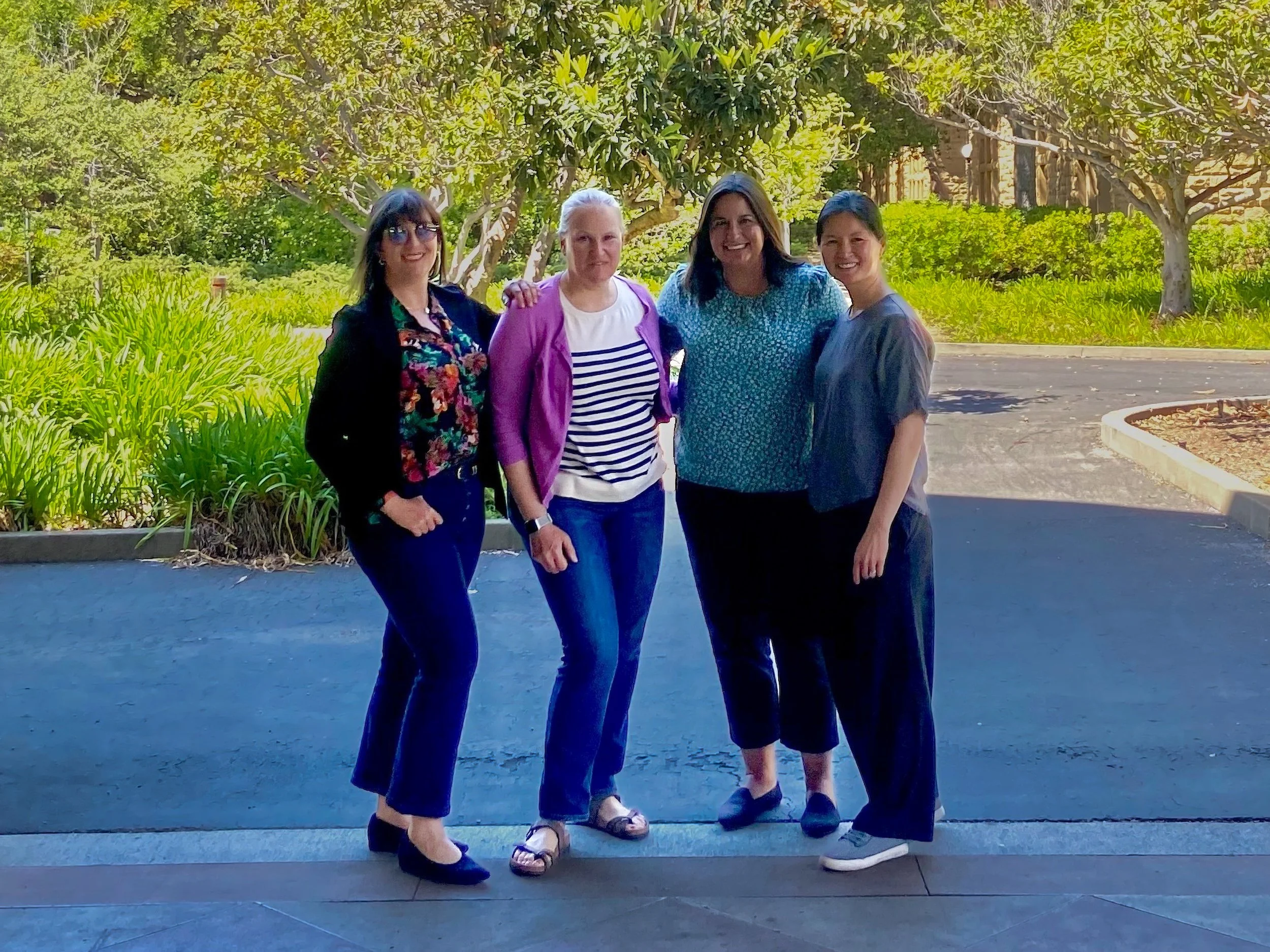
The Align R&D Founding Team at a retreat